
• Work
  • About
  • Team
  • News
Menu

Urban Risk Lab

  • Work
  • About
  • Team
  • News

← Team

February 9, 2024
 

Larisa Ovalles

Research Scientist

Larisa brings nearly a decade of experience in disaster recovery and climate resilience, specializing in post-disaster housing strategies and the advancement of local preparedness through community-centered planning and design. Larisa is currently leading multiple applied research initiatives focused on advancing affordable climate resilient housing strategies, alternative models for post-disaster housing delivery, developing tools that integrate resilience into local planning systems and designing community resilience hubs, both across the United States and Latin America. 

Her research and illustrations are featured in the recently published book “Design Before Disaster: Japan’s Culture of Preparedness,” which explores Japan’s long-standing approaches to disaster preparedness and the role of policy, design, cultural memory, and community infrastructure in reducing risk. Larisa’s research and fieldwork on community climate relocation and displacement in Puerto Rico after Hurricane Maria and Irma has been published in the Journal for Landscape Architecture, titled  “Retreat Critique: Deliberations on Design & Ethics on the Flood Zone.” Larisa holds a Bachelors in Architecture from Cornell University and a Master of Science in Architectural Studies in Urbanism from MIT.
 

December 16, 2022
 

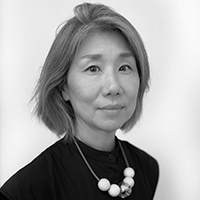
Saeko Nomura-Baird

Research Scientist

Saeko holds a Ph.D. in Informatics from Kyoto University, and her core expertise is in design ethnography and human-computer interaction. She has extensive experience leading user studies and field research in various stages of design projects. In addition to her core research, at the lab, Saeko is also responsible for coordinating the lab’s project in Japan and engaging with Japanese institutions and government stakeholders.


December 7, 2022
 

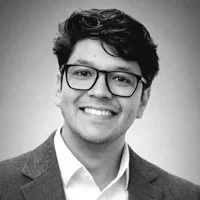
Mayank Ojha

Research Scientist

Mayank is an applied researcher with a background in architecture and urbanism, working at the intersection of climate resilience, geospatial systems, and AI. His interests center on sensemaking and decision-support in complex, uncertain environments, with a focus on enabling collaborative and collective planning and stewardship. He develops human-centered approaches that integrate participatory methods, environmental data, and computational tools to strengthen community resilience.

At MIT’s Urban Risk Lab, Mayank leads the design and deployment of geospatial and AI-enabled decision-support systems used by governments and communities. His work translates field research and hydro-climatic analysis into operational platforms for risk awareness, preparedness, and response, supporting collective action and planning across diverse socio-environmental contexts.

 
← Newer Posts Older Posts →

Instagram

The MIT campus sits on reclaimed land, originally tidal flats. Since reclamation, both the city and the campus have grown at a rapid pace during the past 100 years. With sea-level rise, increased precipitation, and the associated risk of increasing s
#blackouttuesday ⚫️✊🏻✊🏼✊🏽✊🏾✊🏿
“Post-Quake: Faster the Recovery, Bigger the Victory!" Games are shown to be more effective in teaching disaster response, transforming the problem into an approachable, thought-provoking, and fun scenario without trivializing the disaster
"SWEPT! Taking Recovery Housing by Storm"

Games are shown to be more effective in teaching disaster response, transforming the problem into an approachable, thought-provoking, and fun scenario without trivializing the disaster experience.
"Where There's Smoke: a cooperative not-just-another-disaster game"

Games are shown to be more effective in teaching disaster response, transforming the problem into an approachable, thought-provoking, and fun scenario without trivializing
Repost from @aloha_amor_lily
•
Who says that work and play can't mix?

Yesterday, I got to play test the disaster games that our  students designed for 4.270 Innovation for Disaster Relief and Preparedness.

There were 3 scenarios, and thus ther
So proud to be a part of the amazing team who worked together the past 2yrs to make the guide happen! The Urban Risk Lab’s contribution was the introductory chapter that lays out Puerto Rico’s past and future hazards, risks and vulnerabil
Sending off our summer intern, Celia Sanchez-Zelaya today! She presented her summer research poster on disaster mitigation strategies yesterday at the 2019 MSRP Poster Session. #mitmsrp
Urban Risk Lab’s David Moses presenting a sampler of lab projects - RiskMap, FluxMap, PrepHub Nepal, FEMA Alternatives to Post-Disaster Housing -  at the Boston x Netherlands event last night at the BSA Space
At this weekend's PREPHub design charrette at PSU, Portland residents contributed amazing energy and many ideas on disaster preparedness and public space design. Excited to be working with so many committed residents on this project!
What should housing preparedness and recovery look like in your community? The Urban Risk Lab's Larisa Ovalles last week in Toa Baja, Puerto Rico, working on local planning for housing resilience and recovery. This is one of several pilots being host
Friday afternoon brainstorm on Japanese disaster preparedness parks #bosaikoen
4 years after the ‪#nepalearthquake‬: The Prephub Nepal pilot provides access to a safe water within a restored and updated paati (community pavilion). During disasters it acts as an emergency back-up with access to water, power and emergency supplie
Risk Map testing for evacuation shelter management in Kumamoto, Japan. 13,500 people participated in the city-wide drill.
Urban Risk Lab featured in Architecture and Action, edited by @ichernyakova and Meejin Yoon
The Risk Lab’s @lizzieyarina talking preparedness and adaptation in US island territories at #aag


Accessibility

© MIT Urban Risk Lab 2025